
Why it’s unique: A fast-paced, non-partisan, multi-platform creative intervention determined to increase student voter turnout.
And it worked.
Objective: To make voting irresistible to our university community through an energetic, student-led creative campaign. Accomplish increasing student voter turnout and partner with established civic organizations to spread the word that voting is sexy.
Approach: As an interdisciplinary team of 16, we tackled this project from every angle we could consider: event pop-ups, graphics, social media, and videos. We focused on primary themes such as voter experience, understanding the ballot, and the absentee voter process. To bring a unique energy that would make our campaign stand out from the sea of red, white, and blue propaganda, we chose a color scheme that strayed far from trite, partisan imagery that is often overdone. We produced an image that was lighthearted, eye-catching, and provocative, from aesthetics to content. Each major angle we pursued will be broken down sequentially as you scroll through the project.
Timeline: 12 weeks
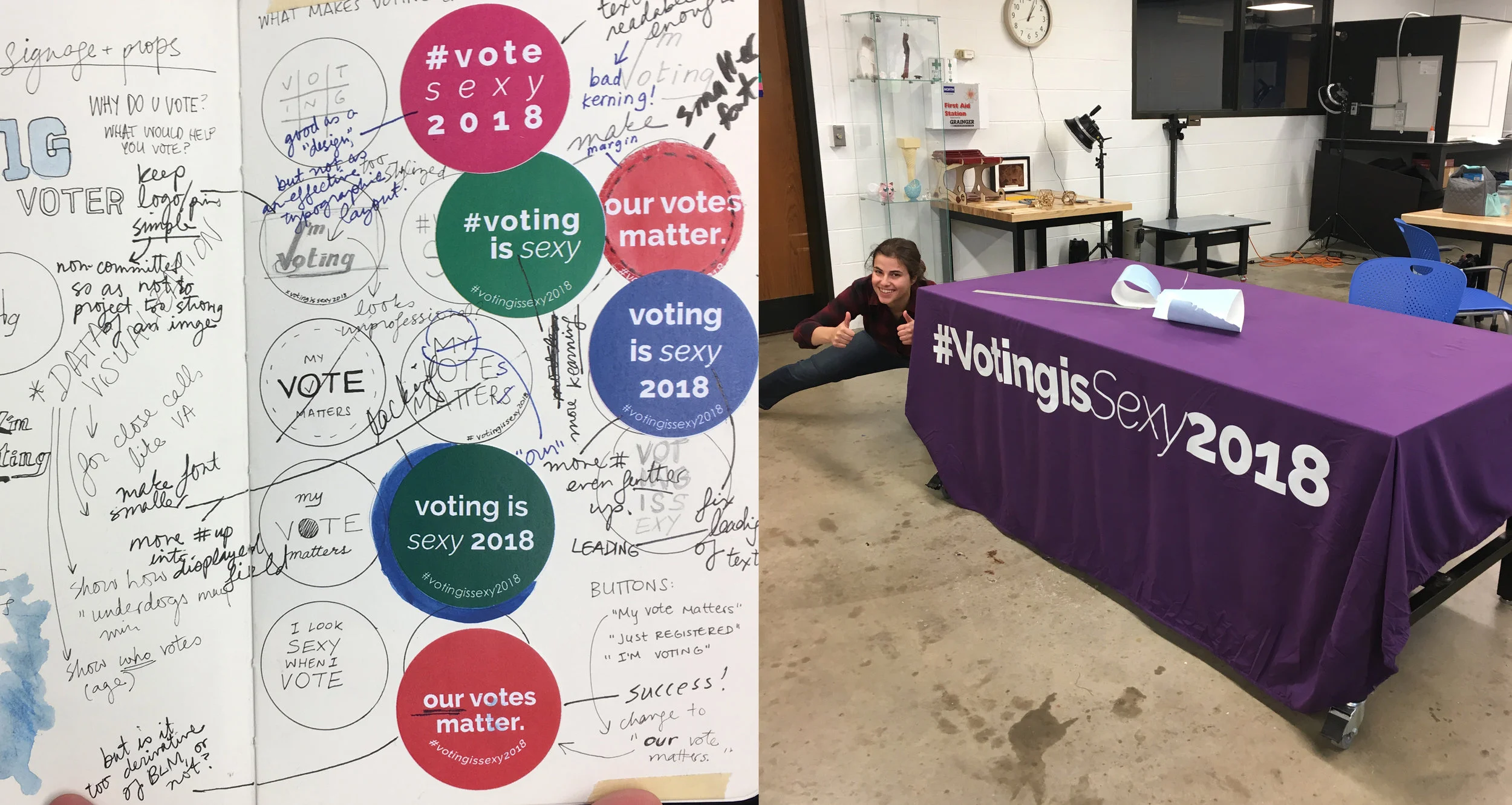
My Roles: copywriting, events/experience coordination and execution, physical construction of materials (tablecloths, buttons, flyers, speech bubbles for photos)
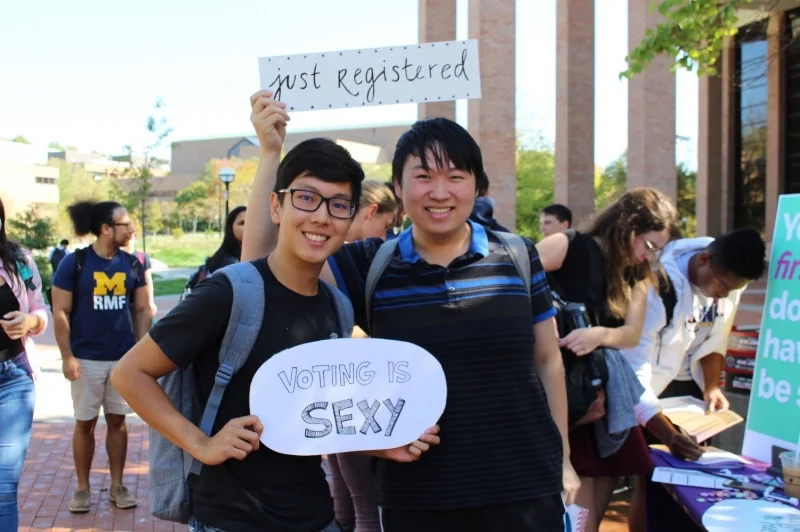
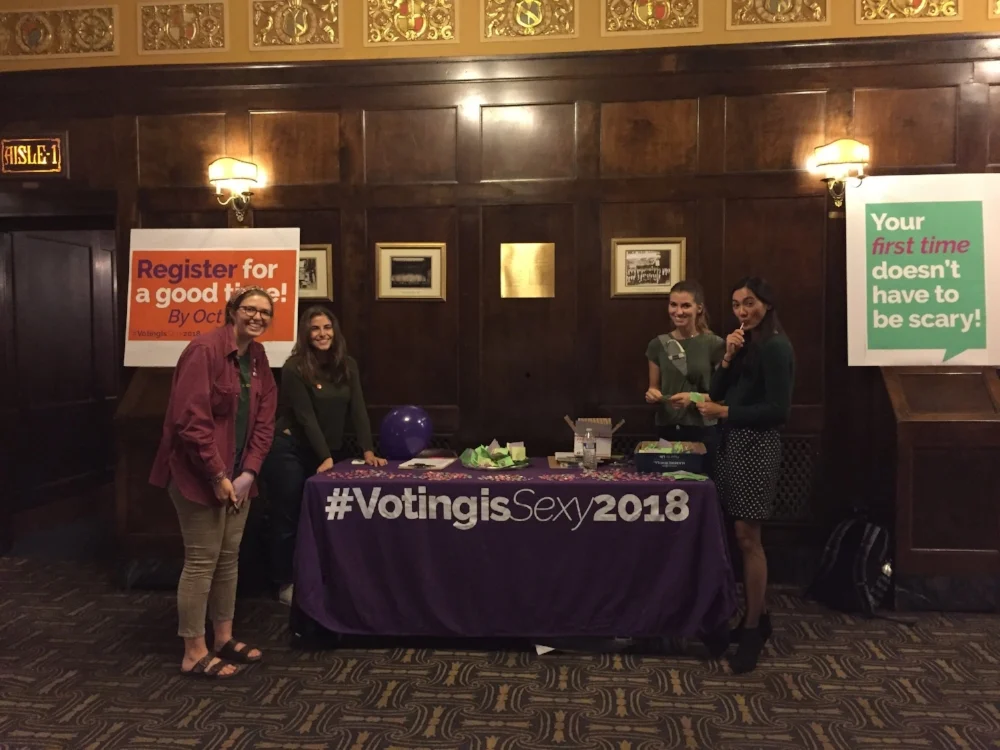
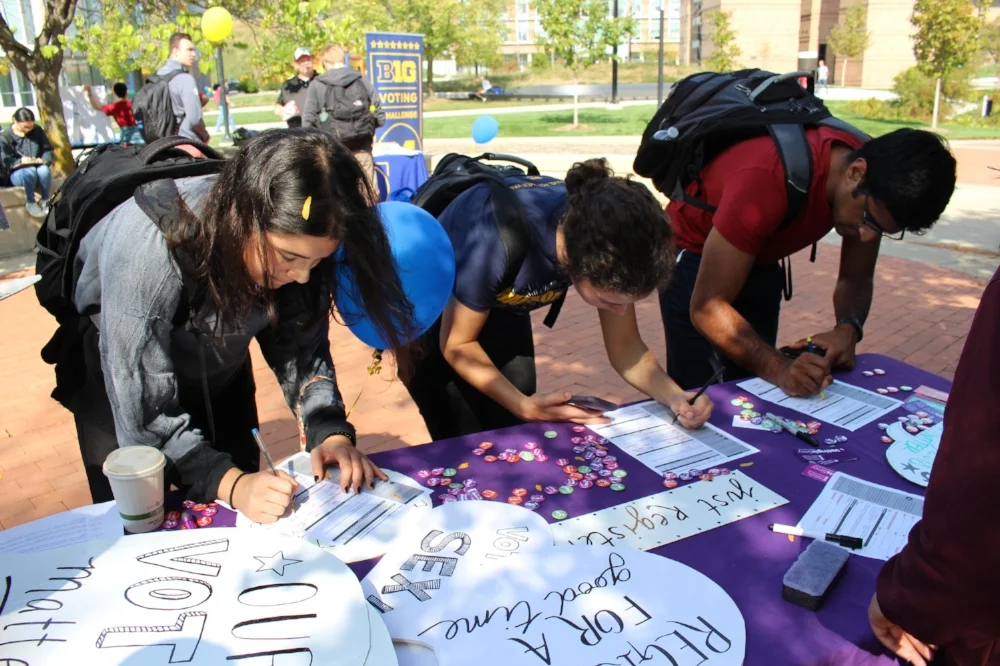
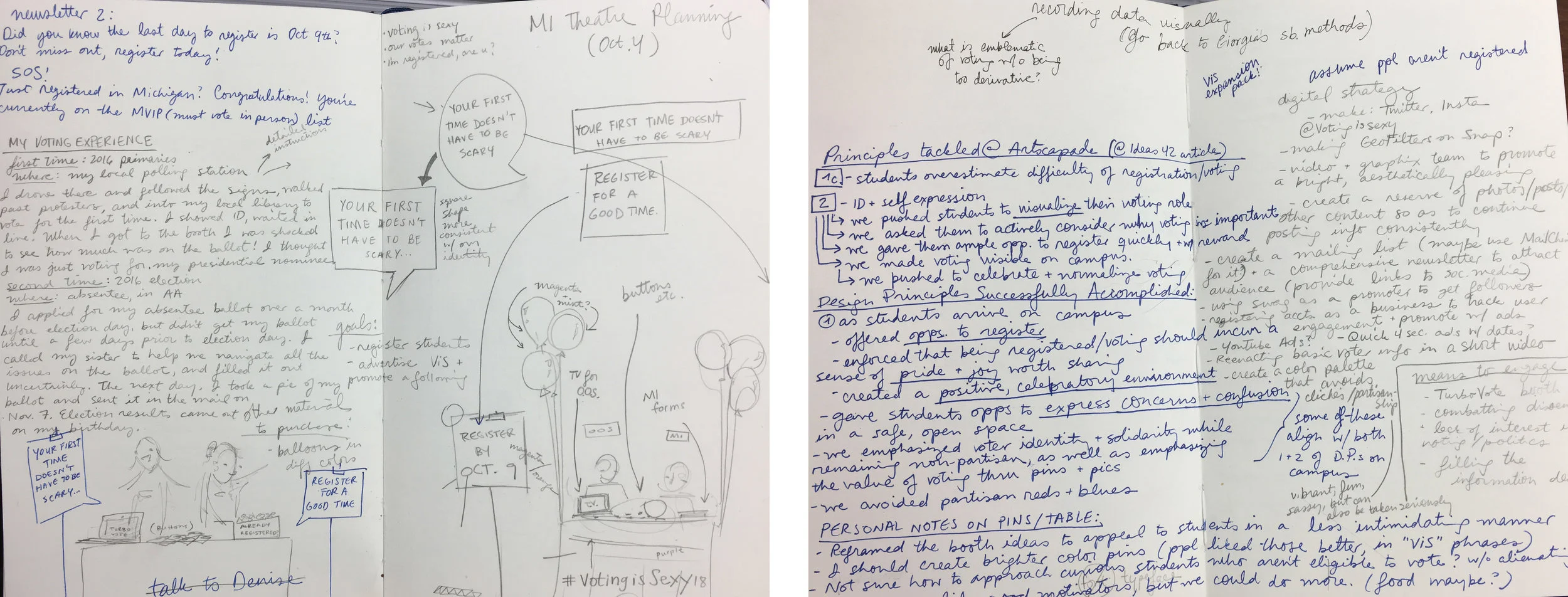
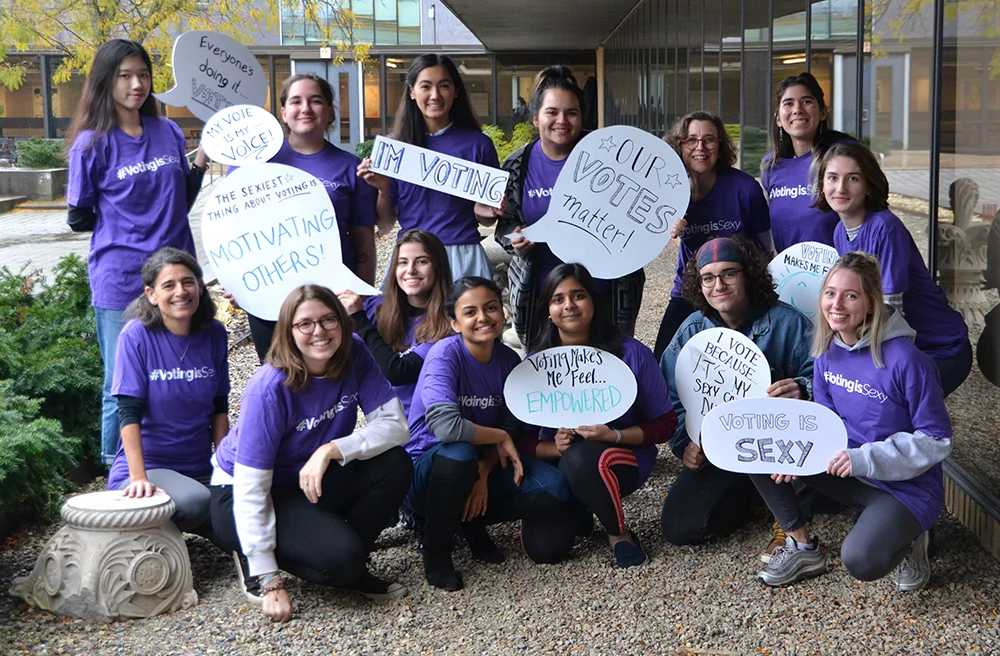
Process: At all of our pop-ups, the primary goal was to get students registered- be it in their hometown, in Michigan, or signing up for an absentee ballot if they were already registered. We strategically selected venues for pop-ups, often partnering with larger university groups and fairs, as well as meeting our peers where they were expected to be (such as at the local Theater where the art school’s weekly lecture series was held). We came equipped with buttons that promoted the sexy voting lifestyle, as well as fun signage for students to pose with and celebrate the right to fulfill our civic duties.
Takeaways: It was clear from early on that the key to attracting students to our presence was the way in which we framed our message. Ask questions that are positively skewed that make the answer of “no” noticeably less appealing. For example, “would you like to come and celebrate our right to vote as citizens?” appears more desirable than “come take a picture and register to vote!” A call to action proved more successful than shouting statements into a mass of students. Another significant motive was the presence of treats, such as candy or donuts. The inclusion of snacks significantly increased our student participation and registration rates, from as extreme as 1 registration to 48 at a single event.
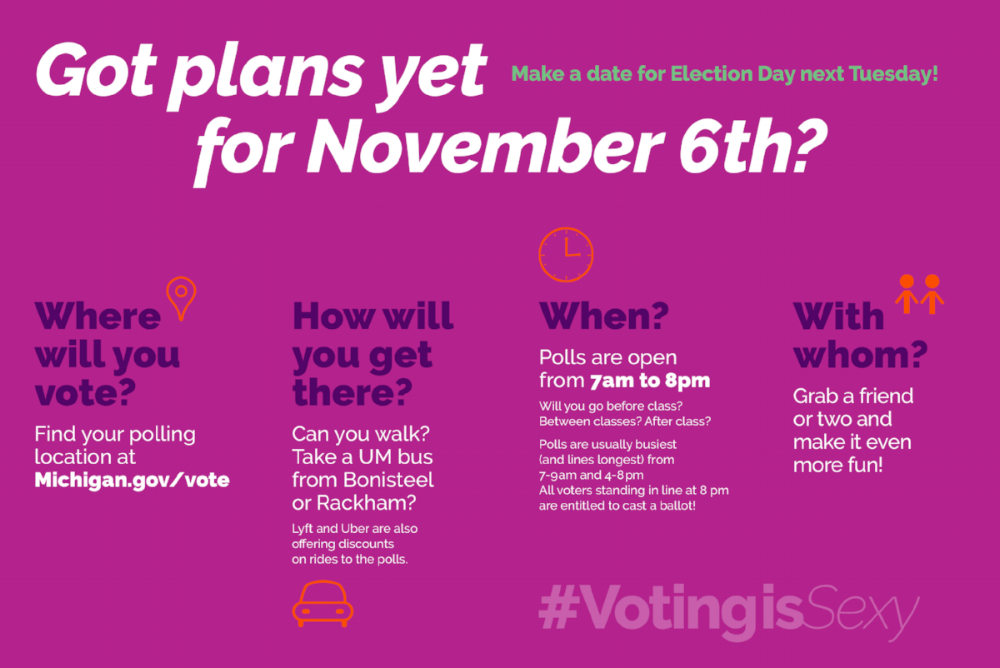
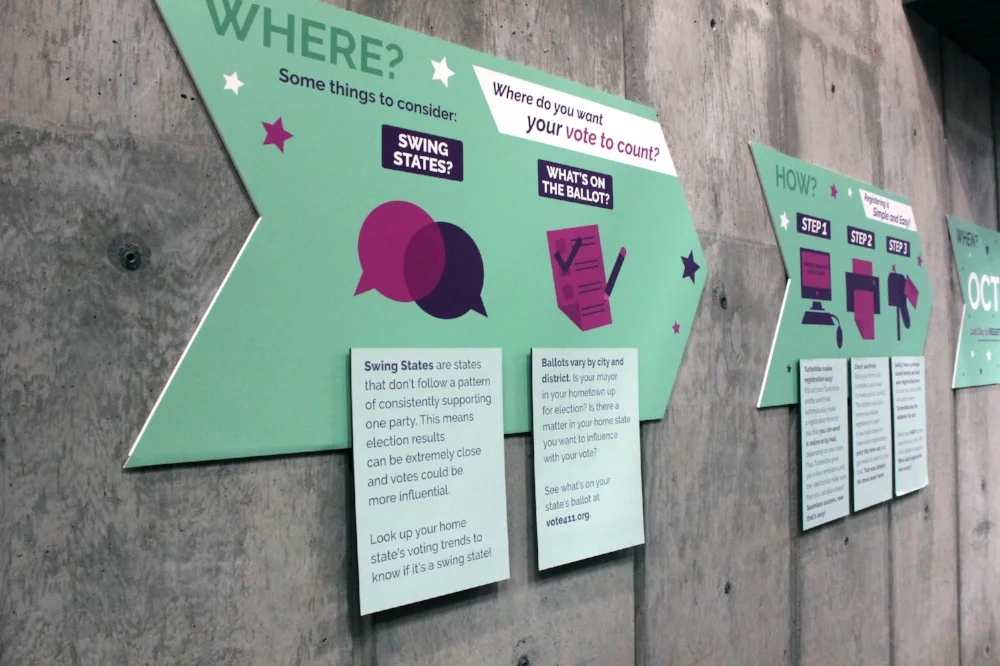
Process: While we could answer and provide help to individuals brave enough to approach our table, we knew we weren’t reaching everyone simply through in-person events. To shrink the communication gap, graphics such as these were installed around the most trafficked halls at the art school, as well as published online through our social media accounts. These works were able to take common queries about the voting process and transform them into engaging templates for a wider range of students to learn from. Publishing vibrant, deceptively simple media was an effective way of both informing the public and establishing our brand in a short period of time.
Takeaways: Working under a short timeline meant the writing and editing process needed to be swift- and often times nonexistent. To produce content faster, making templates to place information on was a quick, and clean way to get the job done while keeping a consistent visual design.
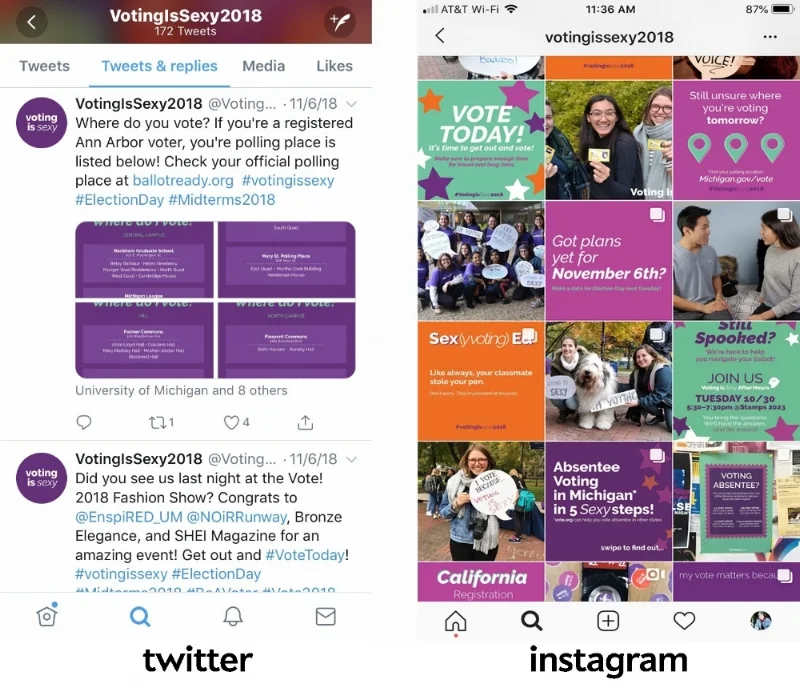
Approach: Using Facebook, Instagram, and Twitter, we continued our mission to inform as many as we could, as quickly as we could. The Instagram site was carefully curated to have a checkerboard feed, making posts look appealing both individually and collectively. Digital media sites served as places to advertise, repost, and share essential content for our Michigan student audience. Template graphics often came into play on Twitter, where frequency of posts is much higher than our other two platforms. Photos from exciting events and FAQs were the most published content for Instagram, whereas Facebook was dedicated to longer spans of information, as well as videos our class produced in partnership with the acting department at the University.
Takeaways: It’s critical to have a pool of content to draw from for posting online. Drawing from our experience with producing graphics, templates were often used for content (such as our Twitter’s #MyVoteMattersMonday), as well as photos with students as excited to vote as we were. It was interesting to see where our campaign held the most traction, as our striking visuals made Instagram out to be our most successful platform. The importance of understanding the language and etiquette that corresponds to different forms of social media, and how it relates to campaign content, is necessary to maintain a successful site.
Greater Impact: The work accomplished and audience reached throughout this campaign contributed to University of Michigan’s student voter turnout increasing by over 300% this midterm election season.
Personal Reflection: This course was an opportunity to completely shape the face of a campaign with meaningful purpose. This being the very first time the course was taught meant defining countless ambiguous challenges, and pushed me to make choices quickly and critically. The challenges and triumphs of this campaign have shown me a raw look at what it takes to execute a tenacious organization at a smaller scale.
Skills Acquired: digital marketing strategy, copywriting, buttonmaking and using vinyl, interdisciplinary collaboration, events planning and strategy, design as a vehicle for social change.