

TurboTax Latino
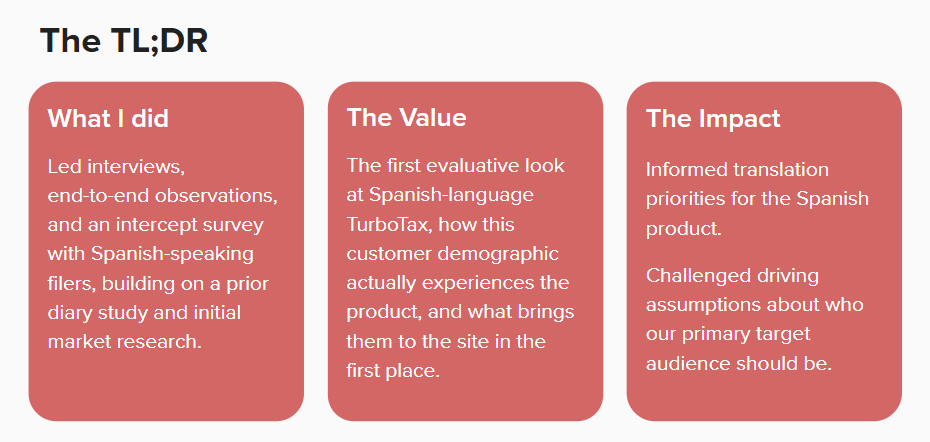
Why it’s worth checking out: A multi-method study evaluating the new Spanish-language TurboTax experience. Established foundational knowledge into Spanish-speaking customer cohort and why they abandoned TurboTax at higher rates. (2023)
Background
“TurboTax Latino” is the Spanish-language version of TurboTax. After a partially translated soft launch, it was more fully localized and subsequently advertised for the 2023 tax year. The business was aiming at bicultural Spanish speakers, but Spanish-speaking customers were abandoning the product at higher rates than core users, and we didn’t know why.
As the sole researcher for Latino, I planned a study around: 1) where in the filing journey Spanish-speaking customers hit the most friction, and 2) who was visiting in Spanish and what they hoped to find. Previous market research, interviews with biculturals, and a limited diary study from the earlier, partly translated season gave us a starting point. I synthesized the diary study to shape this season’s plan, but no one had yet watched these customers file from start to finish.
Methods & Process
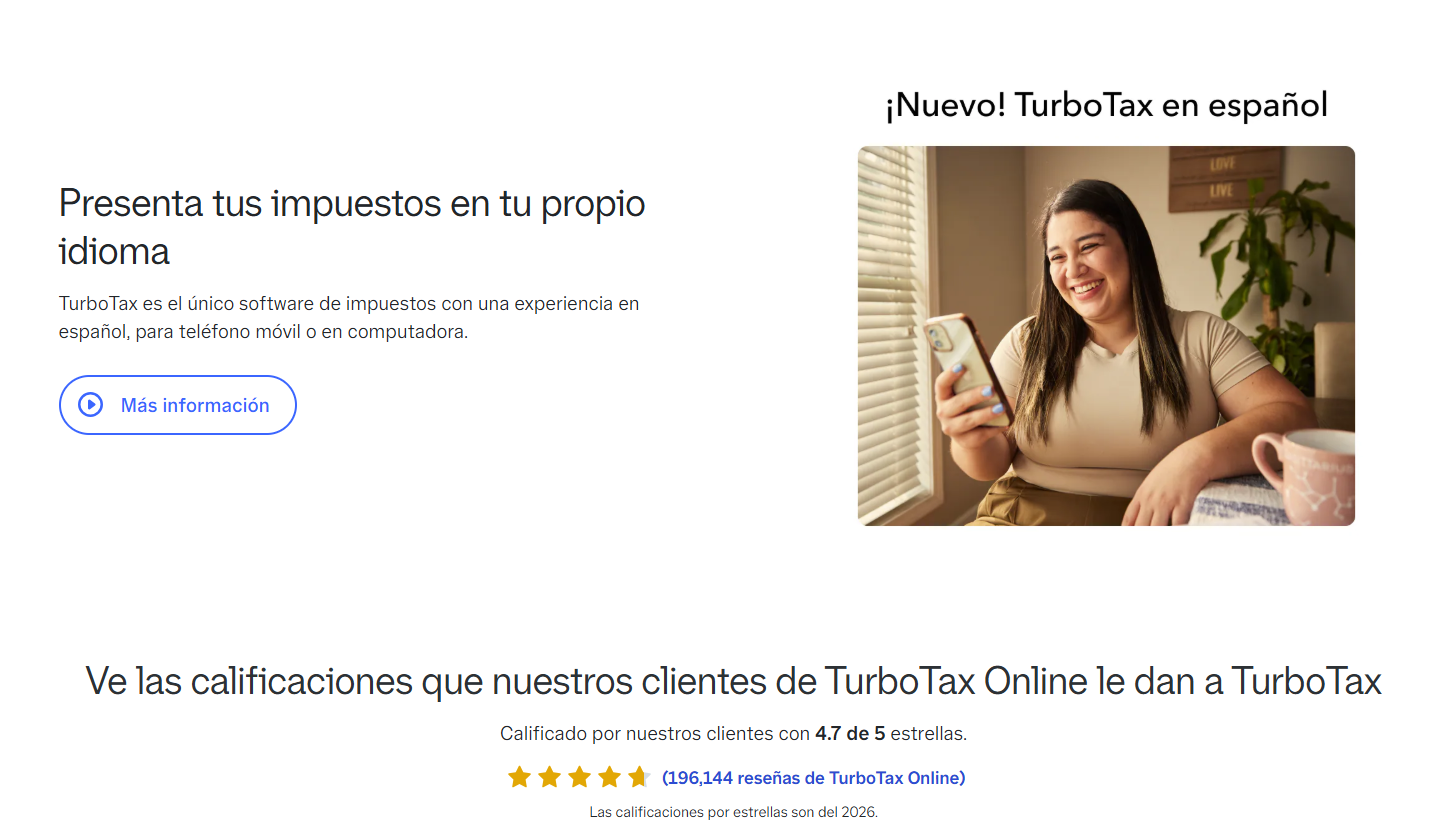
The people our team most needed to hear from were Spanish speakers who relied on the translated product to file with confidence. Traditional recruiting platforms lean toward English-speaking U.S. residents, who are less likely to need a fully translated experience. So I used an Ethnio intercept on the Spanish marketing homepage, which allowed me to reach people with real intent to try TurboTax.
The intercept served as both the screener and the survey. It captured where people had heard about TurboTax, why they visited the page, and their filing status at the moment. The 105 qualified responses received gave us a much wider view of Spanish-speaking site visitors than in-depth sessions alone could. Working with a peer front doors researcher, we compared the trends to a similar intercept running on the English marketing page at the same time. This highlighted how differently the two groups’ intents appeared to be.
For qualitative interviews, I ran 10 “follow me home” sessions in Spanish, each 2+ hours. Every session started with an in-depth interview about the participant and their tax situation, then transitioned into observingthem begin filing in TurboTax.
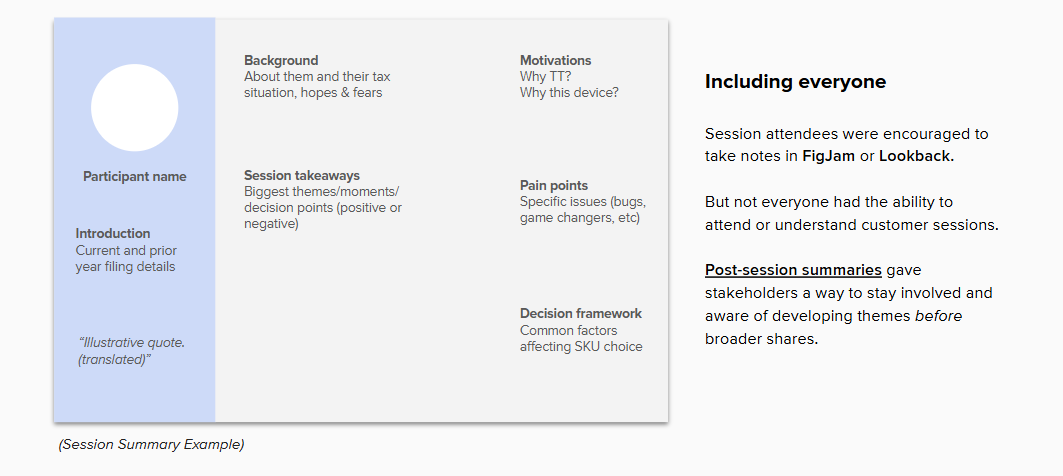
As most of my stakeholders didn’t speak Spanish, I wrote post-session summaries to keep everyone involved before the broader readouts. Weekly cross-functional syncs and analytics reviews also helped shape the study as it went.
Results & Impact
This was the inaugural qualitative documentation of the Spanish product experience. I mapped pain points to in-season analytics data (specifically live engagement metrics and NPS data), and built out customer profiles from interviews, survey data, and earlier market research. Survey learnings pointed out the distinct needs (and resulting pain points) that Spanish-speaking users had when visiting the TurboTax homepage compared to their core product counterparts. That mismatch gave us a concrete lead on where to expand translation next in a way that met customers where they were, as opposed to forcing behaviors that didn’t align with their needs.
The research also highlighted that the greater opportunity lay with serving unacculturated Spanish speakers rather than the bicultural audience we’d set as an intermediary target, emphasizing the requirement to to fully translate the entire product experience.
Next Steps: Findings redirected translation priorities for the Spanish offering— particularly on translating beyond the in-session filing experience — and provided the product team with foundational knowledge on the Spanish-speaker user experience.
Reflection: Shortly after tax season, Spanish product team members were folded into higher-priority work, and I wasn’t able to track impact long-term. I learned that research tied to a small team may be limited and vulnerable to changes. Since this project, I learned to socialize emerging priorities with broader TurboTax teams earlier in the season, so the work had more invested owners beyond the immediate team it was designed for, and research impact could ripple further into the broader product ecosystem.